

Machine tool control systems typically involve servo motion and discrete input / output control. In this manner they only indirectly control the metal cutting process and consequently the economic and efficient production of discrete parts.
Intelligent Machining Systems attempt to more directly control machining processes by incorporating models of the cutting process and real time sensor data. Operational parameters such as cutting speeds and feeds are formulated to directly address goals of economy and product quality. Integrate technologies related to sensing, modeling, control and monitoring. The process variables involved include tool condition, process cost, rate of production, and part quality.
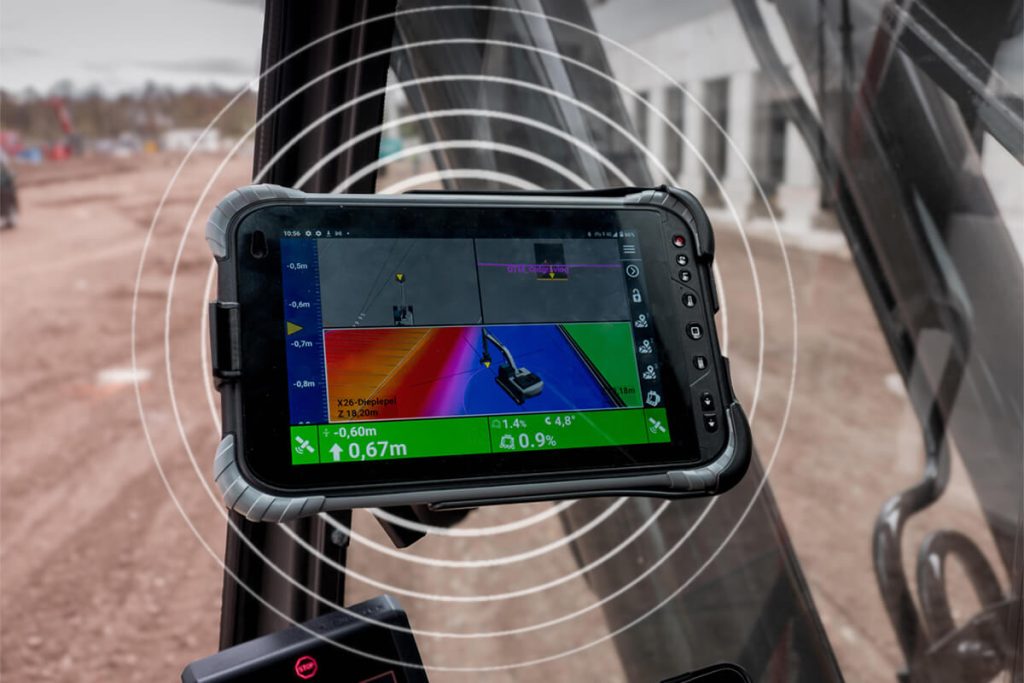
The Topcon MC-Max Excavator solution, for example, extends the original machine control system with the addition of an ultra-smooth hydraulic interface. With easy-to-use finger-tip control, the technology is designed to provide automated depth control when digging to grade in flat, stepped or sloped applications. The system allows experienced operators to improve their skills, while new operators are quickly able to perform like a professional.
By simply pulling back on the stick, operators can automatically control digging depth, boom elevation and the bucket angle – ensuring that they are on grade every time and avoiding over-digging. This saves both new and experienced operators time and money, through an estimated increase in productivity of around 30%. The technology also means that operators only move the earth that is required, which in turn avoids over-digging – saving additional costs of fuel and unnecessary transportation of materials.
Automated 3D machine control systems, such as MC-Max, also provide onsite safety benefits. By using the most advanced and precise GNSS positioning technology and sensors, operators receive real-time, dynamic, on-screen bucket location and design views. Access to real-time designs means that operators can cut more accurately and check against complex designs in the cab, removing the need for someone to check the grade from the trench.
Thanks to onboard connectivity, automated machine control systems like these can also be used alongside jobsite management software like Topcon’s Sitelink3D service. This gives teams remote access to the excavators and reports can be generated from each machine and communicated to a central point. Reports, data and even designs can be shared between the office and the in-cab display to ensure operators are being updated when changes are made in real-time – reducing the need for reworks if plans change. Giving teams up-to-date information on performance also ensures that they can monitor onsite progress and make amends to designs in real-time, even when working remotely.
The future of automated machine control
Automation is just the first step for machine control. Looking forward, not only will automation control machine angle and depth, but the whole excavation process looks likely to become automated – increasing productivity across the entire construction workflow. Through the use of automated machine control technology, like MC-Max and site management tools like Sitelink3D service, machines will be able to act as sensors – enabling real-time monitoring of the progress of projects and sharing of accurate reports on productivity. For the wider construction workflow, these reports will then be used to synchronise with other functions within a project and associated equipment – such as trucks, to streamline the construction process and avoid delays to projects.


