

Milling is the process of removing the top layer of asphalt to a specified and even depth without disturbing the underlying subbase. This allows new asphalt to be laid down without increasing the height of the road and saves you time if the subbase doesn’t need to be fixed. Thanks to the milling process curbs, drainage and other existing structures remain undisturbed.
The cutting drum rotates cutting heads across the surface, chewing up the existing asphalt to the depth of the cutting heads. The vacuum sucks up the milled material and deposits it where the conveyance system can then move it to a dump truck. The dump truck and the milling machine move together so the material is collected as it is removed from the surface, saving a lot of the time and effort that would be needed to collected later. The milled asphalt is recycled and reused in future paving projects.
Once the milling machine has removed the asphalt to the desired width and depth, the surface is swept and cleaned. This removes dust and debris that might cause problems with the new asphalt bonding to the surface. Once clean, the bond between the old and new asphalt should be very good, particularly as the old asphalt has a rough surface from the milling that will bond to the new better.
Proper milling allows new layers of asphalt to be laid evenly and at the same depth as the old surface, ensuring other structures like curbs and drainage ditches are not negatively affected. It also allows for the easy collection of old asphalt to be recycled for new applications.
Differency between 2D and 3D Milling
Milling 2D
2D Milling provides smooth results for elevation and slope control by using a sonic averaging system. 2D Milling uses a sonic averaging system (SAS). The system consists of multiple sonic trackers in combination with any physical reference. It tracks any existing surface, poured curbs or string line. The average of sonic trackers is pushed into the control system for smooth results.
Industry Standard for Asphalt Milling
Topcon 2D systems for pavers and milling machines use time-tested patented sonic technology to deliver high accuracy year after year. The Sonic Averaging System (SAS) references any existing surface and continuously averages the four trackers, to provide superior results and continuously controls the elevation of the screed or mill head.
Track Existing Surface or String-line
The Sonic Tracker™ allows the operator to track a string-line or any existing surface. Simply adjust the Tracker height to the appropriate distance to read the surface. Track existing curb and control the mill depth based of the curb.
Define Mill Depth
The 9256 Control Box allows the operator to dial in a desired mill depth on the fly. This gives the operator the ability to work and make adjustments on the fly keeping the down time ti a minimum. Using the dials on the face of the control box will drive the cylinders up or down to control the mill depth throughout the project.
Durable, time-tested components
The 2D Milling machine uses the same time tested, field proven components as the System Five paver offered by Topcon. These main components have been put through every scenario and every time perform above and beyond expectations.

Features & Benefits:■ High accuracy LaserZone™ covers the entire project■ Provides precise vertical measurement for multiple machines and grade checkers■ Use up to four transmitters to extend work area■ Pave transitions,even through horizontal and vertical curves■ Works with existing Topcon GPS+ systems
Milling 3D
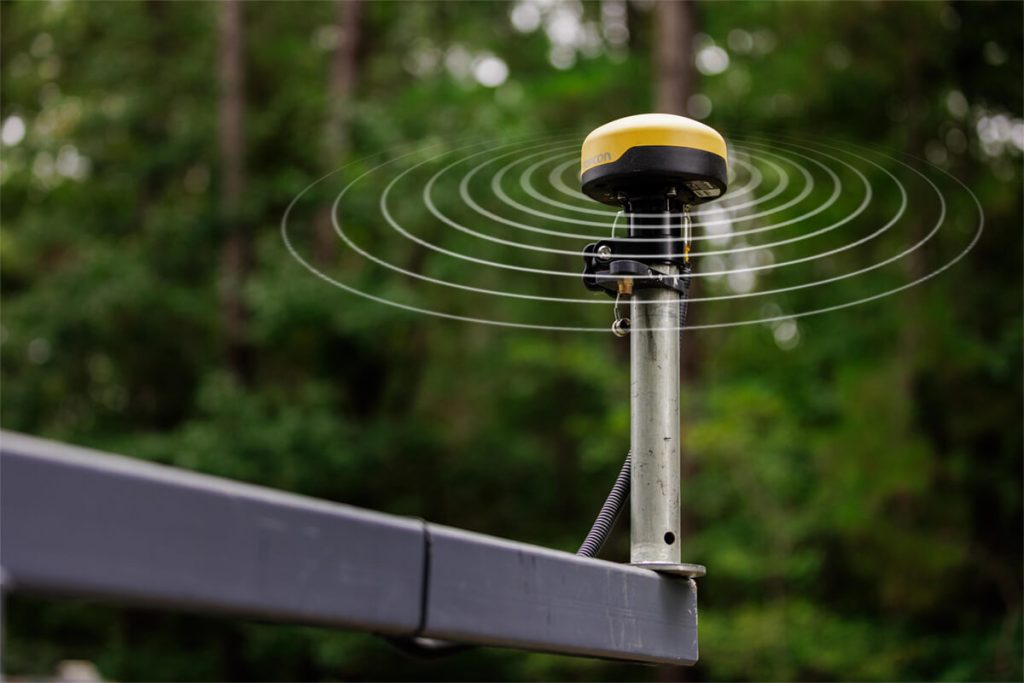
Topcon’s Millimeter GPS System is the World’s First GPS based millimeter accurate control for milling machines. Topcon’s revolutionary Lazer Zone™ technology based, Millimeter GPS uses GPS positioning together with a zone laser reference to give you unparalleled freedom and productivity. Topcon’s Millimeter GPS Milling has the simplicity of a laser, accuracy of a robotic total station, and multiple user capabilities of GPS.
High Accuracy
Using the mmGPS LaserZone™ transmitters for Vertical referencing the 3D milling system holds a high degree of accuracy in all applications. Strategic placement of the mmGPS transmitters allows the entire project to be covered by mmGPS.
Precise Vertical Measurements
Eliminate any vertical fluctuation of GPS by using mmGPS LaserZone™ technology. The transmitters lock in the elevation on both the machines and the survey rovers to eliminate fluctuation and provide vertical data that will match not only from machine to machine, but from machine to rover.
Multiple Transmitters
By using up to four mmGPS transmitters the entire project can be covered. This features allows for continuous operation on both the machines and the survey rovers. Cover up to 2000′ of highway or surround a job site with mmGPS transmitters to eliminate downtime and ensure accurate elevation control throughout.
Mill Transitions
Joint matching? Vertical Curve? Horizontal Curve? No problem with mmGPS! Using a 3D design file to control the machine all the transitions are accounted for and will be precisely constructed. They can be verified with mmGPS on the survey rover for quality control.
Uses Existing Components
The mmGPS system uses all the same main components as other 3D Machine Control Systems. Simply add in the precise vertical control with mmGPS and you have a true plug and play system! The same main components can be swapped from machine to machine to us on all machine types. 3D Dozer system one day, 3D mmGPS milling machine the next!

Features & Benefits:■ High accuracy LaserZone™ covers the entire project■ Provides precise vertical measurement for multiple machines and grade checkers■ Use up to four transmitters to extend work area■ Pave transitions,even through horizontal and vertical curves■ Works with existing Topcon GPS+ systems


